We need a spite village
posted on in: A Future for the Web, tech and ai.
~597 words, about a 3 min read.
Series Listing (click to open)
- The Wild Web:
- The next decade of the web
April 19, 2024 - We Need To Rewild The Internet
April 20, 2024 - The Revenge of the Home Page
May 1, 2024 - We can have a different web
May 1, 2024 - Manifesto for a Humane Web
May 13, 2024 - The Internet is a Series of Webs
June 8, 2024
- The next decade of the web
We’re being told that AI is inevitable, that using it is what the cool, successful movers and shakers do, and that ignoring it is for the crusty luddite holdouts.
And I feel stuck between those two positions.
Lauren Pope's digital zine on the challenges of considering AI within her work and the environment of inevitabilism all around us in regards to AI is really great.
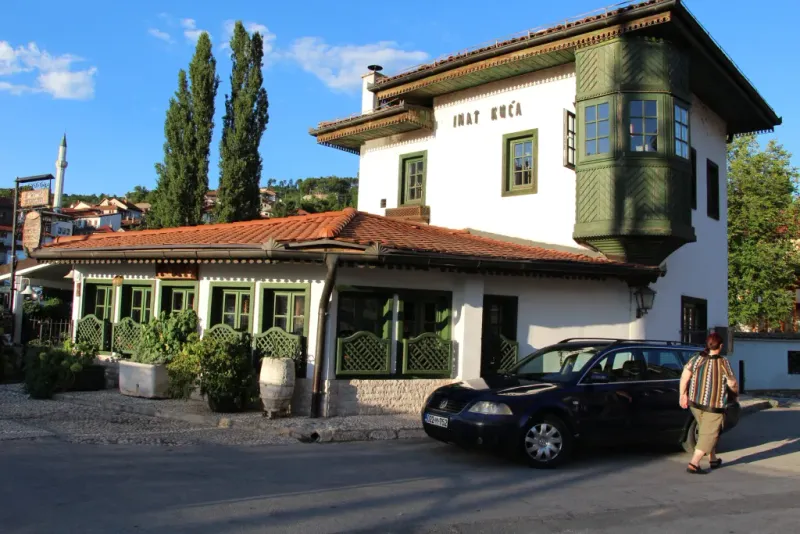
I find the idea of a spite house an apt metaphor for this specific type of resistance against AI that Pope describes, an act that sits at the nexus of economic protest, luddite sabotage, and public political objection.
You can find spite houses – also known as nail houses and holdouts – wherever and whenever there’s growth. People who refuse to give up and somehow manage to keep their home standing while everything changes around them.
Her read on the what AI is doing to the work of people who create on the web is right on as well:
The pattern is consistent: impressions up, traffic down. People are getting their answers without visiting the source.
[...]
The free web isn’t thriving. Anyone who publishes on it knows this. We’re losing traffic and business models, but we’re also losing a vision of what the web could be. Open, distributed, owned by everyone and no one. A space where you could build something and people could find it. Where linking mattered, where citation mattered, where the web was a conversation, not a one-way extraction of value. Where you could fact-check and unpick the biases (some of the time, anyway). I’ve lived on this web my whole adult life. I can’t watch it become something else without saying something.
It is a lie to say that AI isn't reshaping the web. It's changing how millions of people use the internet, a vast unsupervised unethical test no one agreed to running on the most important informational resource of modern human civilization.
Pope also gets to a core issue that I think is often missed. The preponderance of AI slop didn't start with AI, it started because companies like Google and Facebook created tools that economically incentivize slop to begin with, that was already being created, and then made it easier and faster to make.
This kind of slop didn’t start with AI. For as long as I’ve worked in the discipline, a huge amount of content has been created through regurgitation, because companies wanted to rank for a keyword, irrespective of whether they actually had something to add to the topic. AI is just speeding this up, because it’s making it easier than ever to create unoriginal content.
But it’s also exacerbating it. If the free web is over, if the deal between the publishers and platforms is broken, where’s the incentive to create anything original and new? It’s a race to the bottom, where we’re all trapped in a closed loop of ever crappier content and more and more unreliable information.
I found Pope's conclusion invigorating:
A spite house is only a spite house if it stands alone. Individual resistance is futile – and lonely. But collective resistance? That’s different.
We don't have to listen to the calls of inevitability that are all around us because nothing is inevitable. Another way is possible and we can build it, demonstrate it, show it to others and help bring them aboard. What we need is to build spite villages.
This was a great read, go off and read the whole thing.
—
— Via Lauren Pope, Spite House: AI, disintermediation and the end of the free web (archived)